

How to teach colors to toddlers can feel surprisingly confusing when your child calls every crayon blue, loses interest in a worksheet, or happily matches two red toys but cannot tell you their color. You might wonder whether you need flashcards, more practice, or a completely different approach. Understanding how to teach colors to toddlers is essential for their learning.
Start with something simpler: a few familiar objects, two clearly different colors, and an invitation to play. Name what your child sees and uses. Let them point, match, scribble, and explore without asking for a correct answer every few seconds.
Knowing how to teach colors to toddlers effectively can make the learning process enjoyable.
One effective way to learn is by incorporating daily activities that show how to teach colors to toddlers.
These tips on how to teach colors to toddlers will help you create a rich learning experience.
There are numerous activities that illustrate how to teach colors to toddlers while keeping them engaged.
Remember, the most effective method of how to teach colors to toddlers involves fun and exploration.
Utilizing simple tools can greatly enhance your efforts on how to teach colors to toddlers.
Engaging with your child during these activities will show you how to teach colors to toddlers effectively.
A simple way of how to teach colors to toddlers is through everyday interactions.
Using real-life examples is vital in how to teach colors to toddlers.
Try to find opportunities for how to teach colors to toddlers in your daily routine.
Incorporating games can help you learn how to teach colors to toddlers in a fun way.
Play-based methods can be an excellent strategy for how to teach colors to toddlers.
Creating a colorful environment will assist you with how to teach colors to toddlers.
By observing your child’s play, you can discover how to teach colors to toddlers effectively.
Utilize storytelling techniques that illustrate how to teach colors to toddlers.
Through these simple stories, you will know how to teach colors to toddlers better.
Try to incorporate art supplies to help illustrate how to teach colors to toddlers.
In using art, you can find unique ways of how to teach colors to toddlers.
Learning how to teach colors to toddlers can also be done through shared experiences.
Gathering simple materials is essential for how to teach colors to toddlers effectively.
You can choose familiar objects to enhance how to teach colors to toddlers.
By making learning fun, you can smoothly approach how to teach colors to toddlers.
Exploring various colors will allow you to explore how to teach colors to toddlers effectively.
Consider how to teach colors to toddlers through creative activities.
The goal of how to teach colors to toddlers is to create a positive learning environment.
Through engaging activities, you will see how to teach colors to toddlers effectively.
Every child learns differently; understanding how to teach colors to toddlers can help you adapt to their needs.
Use examples that demonstrate how to teach colors to toddlers in practical situations.
Through consistent practice, you will refine your skills on how to teach colors to toddlers.
As you explore how to teach colors to toddlers, keep an open mind to new strategies.
Understanding your child’s preferences is key to mastering how to teach colors to toddlers.
This guide brings together ten easy color-learning activities you can try at home, with simple materials and phrases to use. You will also find ways to adapt each idea, choose toddler-friendly coloring pages, and respond when color names get mixed up.
You do not need to turn your kitchen table into a classroom. A short, enjoyable moment with a yellow crayon and a blue cup can give you plenty to talk about.
What is an easy way to teach colors to toddlers?
Choose one or two colors, connect them with familiar objects, and use their names during play. Offer matching and pointing opportunities alongside coloring. Keep the activity brief enough to suit your child’s interest, and repeat it naturally on another day.
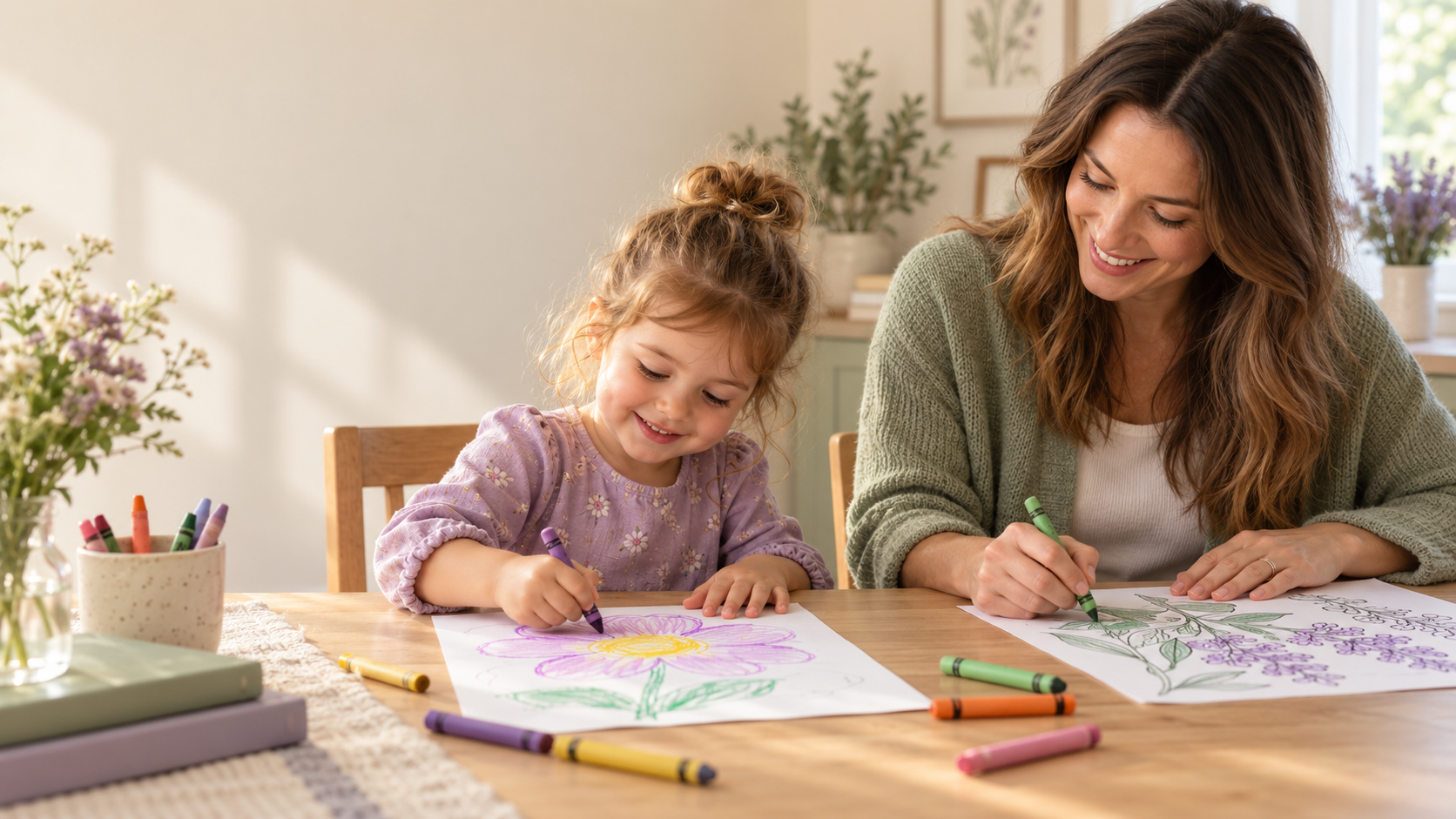
For example, place a blue block beside a blue crayon. Say, “This block is blue. Here is a blue crayon.” Make a few marks on paper, then invite your child to try. You have introduced a color word without needing a worksheet, a test, or a finished picture.
If you add a yellow block, you can show how it looks different. Your child may sort the objects, copy your marks, or take the blocks away to build. Follow that interest and keep using the words when they fit.
Matching, pointing, and naming are different tasks
A toddler who cannot answer “What color is this?” may still notice similarities between colors or understand a color word in context. These activities ask different things of a child:
| Activity | What you invite your child to do | Example |
|---|---|---|
| Matching | Find something with a similar color | Place a blue crayon beside a blue block. |
| Sorting | Group items using color | Put red blocks together and blue blocks together. |
| Pointing or selecting | Respond to a spoken color word | Choose the yellow crayon from two options. |
| Naming | Say the color word themselves | Say “green” when looking at a green leaf. |
Use this table to vary the invitation, not to give your child a score. These are not fixed lesson stages with deadlines. A child might enjoy one task and ignore another, even with the same materials.
For developmental context, the CDC’s 30-month milestones include showing knowledge of at least one color, such as selecting a named crayon. That is different from independently naming a whole set of colors. The checklist is a reference for discussing development, not a diagnosis based on one play session.
Playful interactions can reinforce how to teach colors to toddlers in a memorable way.
Make sure to celebrate small victories as you learn how to teach colors to toddlers.
Think about how to teach colors to toddlers as you go through daily life.
Incorporate stories into your lessons on how to teach colors to toddlers.
As you engage with your child, reflect on how to teach colors to toddlers.
In summary, understanding how to teach colors to toddlers can enrich their developmental journey.

How to teach a 2-year-old colors without constant quizzing
Talk about what is happening more often than you ask questions. Instead of pointing to every object and demanding its color, describe your own choices: “I am using yellow,” or “Your blue marks go all the way across the paper.”
Offer a choice when your child needs a crayon. “Would you like red or blue?” connects the words to a useful decision. If they point rather than speak, you can still respond: “Blue. Here you are.”
The American Academy of Pediatrics encourages child-led exploration, simple play materials, and describing children’s actions in its guide to how toddlers learn through play. You can apply that approach to color learning without creating formal lessons.
Leave pauses in the conversation. Your toddler might be concentrating on making a mark, working out how a lid fits, or telling you an unrelated story. The activity does not need continuous narration to be worthwhile.
What you need for simple color-learning activities
Begin with materials you already have: plain paper, age-appropriate crayons, a few large blocks, a picture book, and familiar household objects. Add a simple printable if your child enjoys pictures.
Use non-toxic art materials labeled for your child’s age and supervise closely. Avoid small loose items such as beads, buttons, or pom-poms with children who may put them in their mouths. Remove broken crayon pieces and keep marker lids out of reach when needed.
A stable surface helps, and you can secure sliding paper with removable tape. Put out only the supplies you intend to use. A small selection can make choosing and cleaning up easier.
For picture options, see our guide to free printable coloring pages for kids. Look at each design before printing; a page with one large object is a more manageable starting point than an intricate scene.
10 easy coloring activities to teach toddlers colors
1. Make a one-color scribble page
You need: Plain paper and one suitable crayon.
Choose a color and make a few marks on your own paper. Say, “I am making blue lines,” then offer your child space to explore. They can make dots, loops, sweeping strokes, or very light marks.
There is no picture to complete. The purpose is to connect the color word with an experience your child controls. If they are more interested in the sound of the crayon on paper, notice that too.
Make it easier: Use a large sheet and secure it so it stays in place.
Try next: Point out one familiar object of a similar color, such as a blue cup, without turning it into a quiz.
2. Match a crayon to a large block
You need: Two large blocks and two crayons in clearly different matching colors.
Place a red crayon beside a red block and a blue crayon beside a blue block. Describe the pairs, then move a crayon and invite your child to help it find its match. Afterward, use either crayon to color a large hand-drawn circle.
Choose blocks of the same shape where possible. This makes color the clearest difference, rather than asking your toddler to compare shape, size, and color at once.
Make it easier: Present one block and help compare the two crayons beside it.
Try next: Add a third color when the activity remains enjoyable.
3. Create two colorful parking spaces

You need: Two large toy cars of different colors, paper, and matching crayons.
Shade one broad area red and another blue. These are pretend parking spaces. Drive the red car onto the red area and describe what you are doing. Invite your child to park the other car, then let the cars go on an adventure.
Your toddler can add scribbled roads, rain, or anything else around the parking spaces. The marks do not need to resemble a road for the game to work.
Make it easier: Begin with one car and one colored space.
Try next: Let your child tell you which car should visit your drawing.
4. Go on a color hunt, then make a mark
You need: One crayon, paper, and a safe space to explore together.
Choose yellow and look for a yellow object in the room. It could be a cushion, toy, or illustration in a book. When you find one, return to the paper and make a yellow mark together.
Repeat only while your child wants to. You do not need a target number of objects. Some toddlers will enjoy the searching; others will prefer staying at the table and scribbling.
Make it easier: Put two large objects nearby so you can look together.
Try next: Draw a rough outline of the object and invite your child to add color.
5. Read, point, and color
You need: A familiar picture book, paper, and two crayons.
Find an illustration with a clear colored object. You might say, “That boat is red,” then choose a red crayon and make a mark on your paper. Invite your child to choose a crayon too.
Keep reading if that is what they want. You do not have to pause at every page or recreate the illustration. One small connection between a book and the crayons is enough.
Make it easier: Use a picture with a plain background and one obvious object.
Try next: Let your child choose a favorite book picture as inspiration for free drawing.
6. Give a teddy a colored blanket

You need: A teddy or doll, paper, and crayons.
Draw a large rectangle on paper and pretend it is a blanket for the toy. Ask, “Shall we make teddy a blue blanket or a green blanket?” Name the chosen color while your child scribbles.
The pretend story gives the choice a purpose. Teddy might be sleepy, cold, or preparing for a picnic. Your child can change the story or decide that the blanket needs several colors.
Make it easier: Offer one crayon and narrate the pretend play.
Try next: Draw a second blanket for another toy and compare the colors without ranking the artwork.
7. Make a simple color collage on paper
You need: A large sheet and two or three crayons.
Divide the sheet loosely into large areas. Make a few red marks in one area and blue marks in another. Invite your child to add marks beside yours, then talk about what you notice.
They might keep the colors separate or cover the whole sheet. Either response gives you something to describe. The page is a place to explore grouping colors, not a sorting test they must finish correctly.
Make it easier: Use just two areas and two crayons.
Try next: Find a large familiar toy to place beside each area, then remove it before continuing to draw.
8. Use an animal picture as a conversation starter
You need: One simple animal outline and a few crayons.
Let your toddler choose a color for the animal. Say, “You chose purple for the rabbit,” and continue the conversation with a playful question about where it is going.
Real-world observations can sit alongside imagination. You might mention a brown rabbit from a book without insisting that this rabbit must match it. The learning opportunity is in using the color word meaningfully.
Make it easier: Choose a large silhouette or draw a very simple animal yourself.
Try next: Explore our animal coloring pages for kids guide for theme ideas, selecting designs with the least detail for beginners.
9. Color a pretend shopping list
You need: Paper and crayons, with a few large toy foods if you already have suitable ones.
Draw two simple shapes to stand for foods, such as a banana and an apple. Talk about the colors of the foods you have at home and invite your child to add marks to the list.
Then pretend to shop together. The list does not need recognizable artwork or realistic colors. Your toddler might tell you that a blue circle is bread, and that can become part of the game.
Make it easier: Begin with one item and one crayon.
Try next: Use the list to find a matching item in a picture book.
10. Take turns choosing a color
You need: A large piece of paper and a small selection of crayons.
Choose a crayon and add a mark to your part of the page. Name your choice, then invite your child to choose. Keep the turns relaxed; they do not have to hand the crayon over immediately or follow a strict pattern.
Ask before adding to their marks. A shared sheet can still have personal space, and a child may prefer a separate page beside yours.
Make it easier: Use separate sheets and copy each other’s color choices if invited.
Try next: Invite an older sibling to join with their own picture. Our guide to coloring as a family bonding activity offers more ideas for shared creative time.
Which colors should you teach first?
There is no single required order. Start with colors that appear in your child’s toys, books, and daily life. Two clearly different options, such as blue and yellow, make an easy starting pair.
You can talk about other colors whenever they appear. Focusing an activity on two colors does not mean hiding every other color until your child has mastered them.
For an early matching game, choose items with similar shades. A pale mint block and a dark forest-green crayon may both be green, but the difference adds another comparison. Explore shades later when your child enjoys discussing how colors can look alike and different.
Keep colorful objects varied over time. If every red example is an apple, the activity becomes less useful for showing that red can describe a car, cup, sock, or crayon too.
What if your toddler keeps mixing up color names?
Respond with the useful word and move on. If your child calls a yellow crayon blue, try, “This one is yellow. Here is the blue one.” You do not need to ask the same question repeatedly until they answer correctly.
Check what the task is asking. Naming a color without help is different from choosing between two crayons. Try a matching activity, model the words during play, or simply allow free coloring for a while.
Also look at the setup. Is the room dim? Are the colors very similar? Is your child tired, hungry, or more interested in something else? Changing the situation may make the activity more enjoyable, even if they still mix up the words.
Avoid making conclusions about development or vision from a home color game. If confusion is persistent and concerns you, or you notice other difficulties or loss of skills, discuss those observations with your child’s healthcare professional.
Ready to try a few ideas together? Explore our guide to how to teach colors to toddlers with ten easy activities using crayons, toys, and everyday materials.
How long should color-learning activities last?
There is no required session length. Begin with a small invitation and follow your child’s response. They might make two marks and leave, or spend longer inventing a story about the picture.
You can set aside a few minutes in your routine, but treat that as an opportunity rather than a target your child must reach. Keep the materials easy to put away so stopping does not feel like a failed lesson.
A color word used while getting dressed can connect with the same word during play later. You do not need to schedule every repetition or record how many times your child gets it right.
How to choose coloring pages for toddlers learning colors
Look for clear outlines, large spaces, familiar subjects, and minimal background detail. A large leaf or ball gives you enough to discuss without overwhelming the page.
Blank paper is equally useful. If a toddler wants to scribble over the whole sheet, a detailed printable adds very little to the experience. Keep both options available and let their interest guide the choice.
For color learning, do not make staying inside the lines the main task. A child can explore green while making marks outside a leaf. Combining naming, neatness, counting, and a finished picture in one activity creates several demands at once.
Print one page first to check its size and clarity. You can enlarge a simple design if the spaces look small. Let a child return to the same page later instead of requiring completion in one sitting.
An option for older siblings joining in
If you are setting up a family coloring table, give each child a page suited to their interests. Your toddler can explore a large shape while an older sibling chooses a more detailed picture.
Our Cute Kawaii Unicorn Coloring Pages collection contains 192 printable designs and is listed for ages six and up. It is an option for older children joining the activity, rather than a toddler color-learning worksheet pack. Check the previews and choose a design your older child would enjoy.

A flexible five-day plan for learning colors through play
Use this as an idea bank, not a schedule to complete. Repeat a favorite activity, skip a day, or replace any suggestion with something your child enjoys more.
| Day | Invitation | A phrase to try |
|---|---|---|
| Monday | Make a one-color scribble page. | “You are making blue marks.” |
| Tuesday | Match two crayons with two large blocks. | “These look the same color.” |
| Wednesday | Find a color in a picture book. | “That boat is red.” |
| Thursday | Give teddy a paper blanket. | “Which color would you like?” |
| Friday | Share a large drawing surface. | “I chose yellow. What will you choose?” |
Keep observations informal. You might notice that your child selects a named crayon, begins matching objects, or uses a new word spontaneously. There is no need to turn these moments into a chart of scores.
Questions parents ask about teaching toddlers colors
Can I teach colors without worksheets?
Yes. Use toys, clothes, books, and crayons on plain paper. Worksheets are one possible resource, but everyday matching and conversation provide plenty of opportunities to use color words.
Should I teach one color at a time or several?
One color works well for a simple scribbling invitation. Two contrasting colors allow choices and matching. Adjust the number to the activity and your child’s interest rather than following a rigid rule.
What if my toddler only wants one crayon?
Let them use it. You can name that color and connect it with familiar objects. Offer other options occasionally without requiring a change. A favorite crayon does not need to become a disagreement.
Should I correct unrealistic colors?
You can name the chosen color without correcting the picture. A purple dog can be part of imaginative play. When discussing real animals, look at a photograph together and notice its colors separately.
Are coloring apps necessary for learning colors?
No. These activities can be done with paper, crayons, toys, and shared conversation. You do not need a device or a paid learning program to introduce color words during everyday play.
Start with one enjoyable color moment
Choose a crayon, find something that matches, and make a few marks together. Let your child decide whether the experience becomes a drawing, a pretend story, or a brief moment before another activity.
Color learning can fit into family life without constant questions or perfect pictures. Clear words, familiar examples, and space to explore give you a practical place to begin.
Which color does your child reach for first? Tell us in the comments, and share the activity you would like to try together.


0 Comments